The federal government offers need-based student aid to postsecondary students each year. Dental students may qualify for Direct Loans through the U.S. Department of Education, which may have lower interest rates than private student loans. Some state governments offer student loan options.
Federal Student Loans
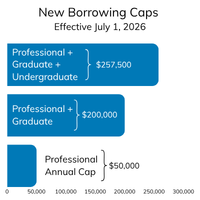 Beginning July 1, 2026, new changes passed in the One Big Beautiful Bill Act go into effect. These include elimination of the Grad PLUS program, new borrowing caps and changes to repayment programs.
Beginning July 1, dental students can borrow Direct Unsubsidized Loans from the U.S. Department of Education up to $50,000 per year. They are also subject to a $200,000 total borrowing limit for dental school, minus any federal loans taken out for graduate degree programs. All borrowers will have an aggregate federal borrowing cap of $257,500 across all postsecondary degree programs.
Learn More
Exceptions for Legacy Borrowers
Borrowers who have taken out Grad PLUS loans prior to July 1, also referred to as legacy borrowers, can continue to borrow up to the cost of attendance using Grad PLUS for the rest of their current program or up to three years, whichever comes first. Dental students who may enroll in a new academic program (e.g., graduate or residency) on or after July 1, 2026, will be subject to the new borrowing caps.
For more information on determining your eligibility as a legacy borrower, refer to the Department of Education’s May 20 FAQ document.
Health Professions Student Loans (HPSL) and Loans for Disadvantaged Students (LDS)
Dental schools may offer loans through the HPSL and LDS programs to qualifying students. Both programs are funded by the federal government and administered by schools. Talk to your financial aid office to determine if funding is available at your school and if you're eligible to apply.
Complete the FAFSA
To determine your eligibility for federal aid and programs like Public Service Loan Forgiveness, complete the Free Application for Federal Student Aid (FAFSA).
Complete your FAFSA
Always consult with your school’s financial aid office before making long-term borrowing decisions.